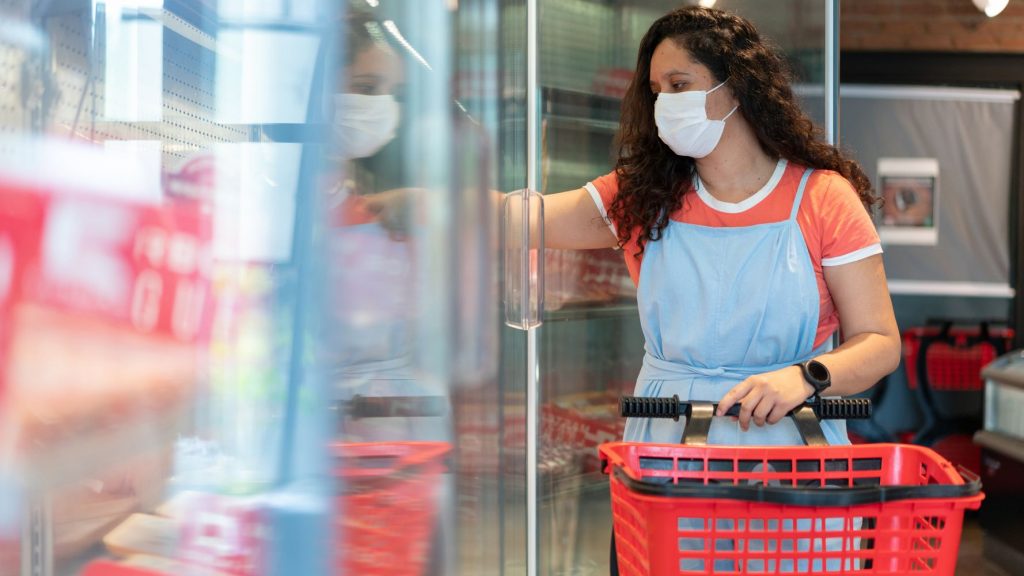
Business secretary Kwasi Kwarteng confirmed a “very narrow” list of sectors whose workers will be exempt from isolation rules will be published on Thursday afternoon. He would not confirm if this list will include the food sector, but he also urged the public not to panic buy.
Why panic buying doesn’t help the situation
While panic-buying is an understandable reaction to an uncertain situation, it could have a profound impact on supply chains – and people’s lives.
HuffPost UK previously spoke to therapists about how to resist the urge to panic buy and the message was clear: focus on alleviating your anxiety, not filling your shopping basket. Panic buying only perpetuates further shortages, leaving some of the most vulnerable people without.
Ratula Chakraborty, professor of business management at the University of East Anglia, told HuffPost UK that stocking up on supplies is really only advised for elderly people or families with members who have underlying health conditions.
Amid the panic buying of the pandemic lockdowns, she said: “People are just taking whatever they can lay their hands on – that’s not a very sensible reaction at all. In the process, they’re making other people anxious that they won’t find their stuff, so it leads to a domino effect.”
Why actually makes us panic buy?
Psychotherapist Nick Blackburn said people are trying to “solve” their anxiety by buying supplies, but when they get to the shops, they’re likely to experience more anxiety because items are running low.
Then there’s the added stress of being criticised or hearing snarky comments by others for doing it – in the supermarket or all over social media. “That’s not the way to make fearful people feel better,” Blackburn told HuffPost UK.
Hansa Pankhania, a therapist of 25 years and member of the British Association for Counselling and Psychotherapy (BACP), believes panic buying is also driven by helplessness, fear and loss of control.
When people panic-buy it’s a “gesture”, she said – they’re doing something to help themselves in an otherwise helpless situation. When we have no control over the bigger picture, we crave control in our “micro world” – our home and daily routines. And in this case, people are doing it by buying up supplies.
That’s not to say you shouldn’t plan ahead. “I suppose if you’ve planned the panic-buying then it isn’t panic-buying,” Blackburn told HuffPost UK. “It might not be possible to plan as far ahead as we might like to, but try to focus on what’s practical to get now.” Having a plan already lessens the anxiety.
So, the message: avoid panic buying but try not to scroll or share scaremongering posts on social media either. And remember, if your local supermarket is out of a certain item, you can always try independent corner shops which are often well-stocked with goods, as well as local suppliers, farms and wholesalers, many of whom will deliver to your door.