These Photos Of Homeless People Aren’t What You’d Expect
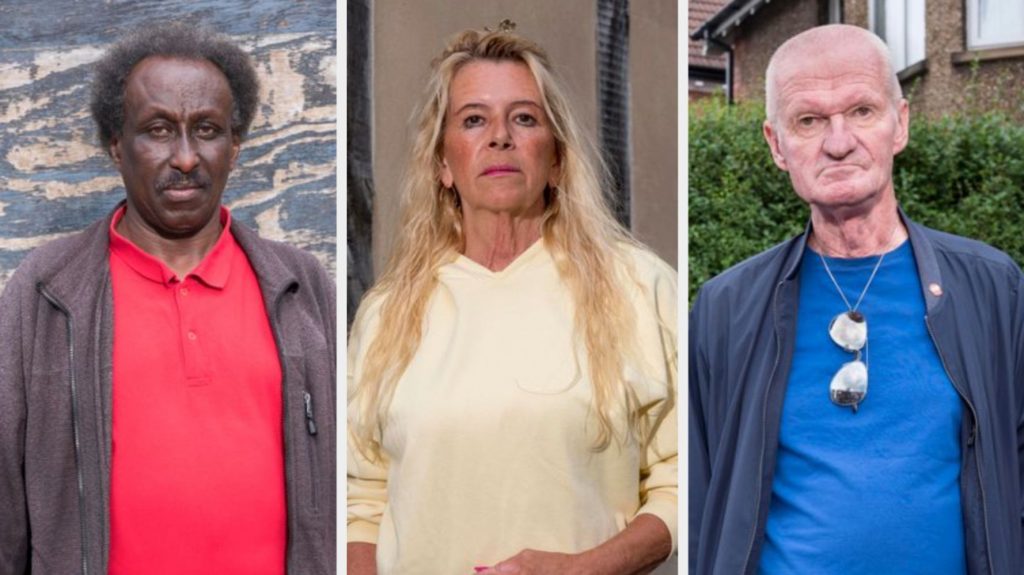
What do you picture when you think about homelessness? Rows of tents, queues at soup kitchens, a rough sleeper in a doorway, someone holding up a cardboard sign with the words “Hungry, please help me” written on it?
This is not the face of homelessness you will see in Agency, a photography series at the heart of Home, a festival of arts and homelessness that opened in Coventry this weekend as part of its year-long City of Culture programme.
If the topic doesn’t seem appropriate for a festival, prepare to reconsider. This week-long “celebration” of arts and homeless services is co-produced by people with lived experience of homelessness in the city. And in the case of Agency, as the name suggests, it’s those people who are taking the pictures.
“Photographs of homeless people tend to be created in such a way where they seem to be an aberration of the urban environment,” says Anthony Luvera, the artist turned “photographic assistant” behind the project. “What I want to do is to work with people to take images where they feel involved, where they can control the process, and where they feel it best represents them.”
Luvera calls these photographs “assisted self-portraits” and they are the product of a months-long process of getting to know someone.
Someone like Mick Bickley, a Coventry local with experience of homelessness, who took Luvera back to his suburban childhood home to pose in front of the window of the room where he was born. It was his birthday that day too, says Luvera, and stories were exchanged of his childhood and the man he is now.
“I was only homeless for a short time, but it felt special to make my assisted self-portrait on my 65th birthday outside the house I was born in,” says Bickley.
“Homelessness can happen to anybody and I hope people seeing Agency will realise this.”

Luvera believes people experiencing homelessness are among the most marginalised and misrepresented in society.
“The predominant narrative of people tends to be centred on the problems the individual has faced – that they were somehow responsible for their situation, rather than the experience of homelessness being a consequence of the structural problems of the way in which society is organised,” he says.
To make an assisted self-portrait, Luvera meets the photographer subject in a location that is significant to them in some way, before teaching them how to use a digital medium format camera, including a hand held flash gun, a laptop tethered to the equipment, and the all important cable shutter release.
To get to this point, there have been weeks of workshops, first in the outdoor space of a cafe in the centre of town, later in the City of Culture shop. More than 30 people attended the workshops in Coventry, including 16 stalwart regulars.
Luvera invited them to take away disposable cameras to document their experiences and parts of the city that were important to them. He then issued an invitation to work with him individually to create their self-portrait.
“A traditional approach to portraits is very one-sided,” he says. “A photographer may spend a little bit of time getting to know someone, researching the topic, pointing a camera, taking a photo, then pissing off with the pictures.”
This process is necessarily slower. “It’s very much founded upon getting to know people in a holistic sense, holding a space that’s very social, very convivial, that’s centred around listening to people’s experiences and enabling their use of photography to articulate the things that matter to them.”
The project was first planned before the pandemic, then put on hold. In the summer between, Luvera began work on a project about homelessness in London with a journalist from a national newspaper and witnessed first-hand the impact of lockdown on people’s housing situations.
“Look, before the pandemic, I’d never seen levels of homelessness quite like it. Cut to the pandemic, when so many people found themselves without stable accommodation because of a whole myriad of circumstances, not least the [closure of the] gig economy in areas such as the hospitality industry – the number of people experiencing homelessness was off the chart.”
“At any one point in Trafalgar Square, there would be queues of 150/200 people waiting in line to receive food,” he says.
Luvera cites reports that homelessness rose by 70% during the pandemic – despite the initial impact of the Everybody In initiative, the government’s plan in March 2020 to bring all people sleeping rough in the UK – estimated at 6,000 –into emergency hotel and hostel accommodation.
“The initiative worked very well in many local authorities, including here in Coventry,” says Luvera, “not only because it housed people, but it brought them together with a network of services to work with them in a very targeted way to move on out of those hotels into more stable accommodation.”
The government has said the scheme is “ongoing,” but others have raised concerns about the number of people now on the streets again. Charities have said we need better, long-term solutions to truly help people like those in Luvera’s project.
About Author