Their approach looks at the production processes of foods in close detail, and it might be a relief for those who care about the planet, but still want to eat the occasional piece of sustainably sourced meat or fish.
“In times of rapid environmental transformation, food seasons as we know them are seizing to exist. In supermarkets, there are tomatoes in winter, turnips in summer and salmon all year around,” Pascual explains.
“At the same time our food landscapes are influenced more and more by periods of droughts, floods, polluted oceans and soil exhaustion.”
Climavore proposes a more flexible approach to eating, where we choose ingredients that work with – not against – the environment at any given time. This might mean shifting to drought-resistant crops in a period of water scarcity, for example, or utilising filter feeders during times of polluted waters. There are also more permanent switches we could be making.
“By removing ingredients that are products of extractive industries, such as farmed salmon, and replacing them with ingredients that are regenerative and reparative, like bivalves and seaweeds, we can start shifting to more responsible ways of eating,” says Pascual.
The pair have landed exhibitions in the likes of Tate Britain and London’s Serpentine Gallery on the topic, and are now among the 2021 Turner Prize nominees.
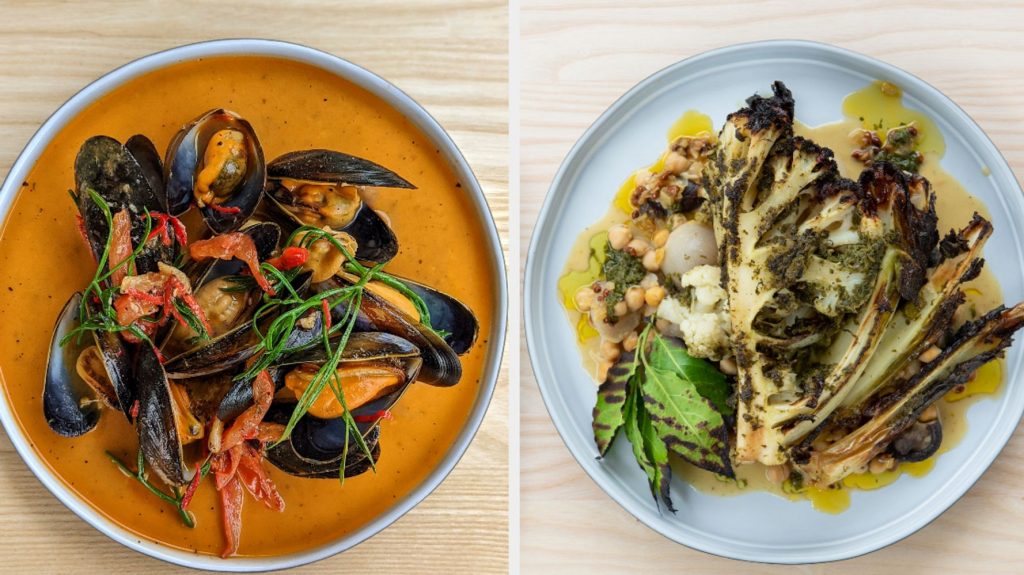
Most recently, they’ve teamed up with the restaurant chain Benugo to offer special ‘Climavore’ dishes at 21 museum and gallery cafe and restaurants across the country, including at the V&A, Science Museum, BFI Southbank and Ashmolean Museum in Oxford.
Dishes on offer include slow-roasted cauliflower with chickpea stew, dulse and sea buckthorn, and rope-grown mussels with urfa and rock samphire.
But when we’re not visiting our favourite culture haunts, how can we eat with the planet in mind at home?
Pascual is keen to highlight that that biggest changes will come from revolutionising the “malfunctioning systems” within manufacturing. That said, he does make the following suggestions that consumers can try to adopt: